
 Bookmark
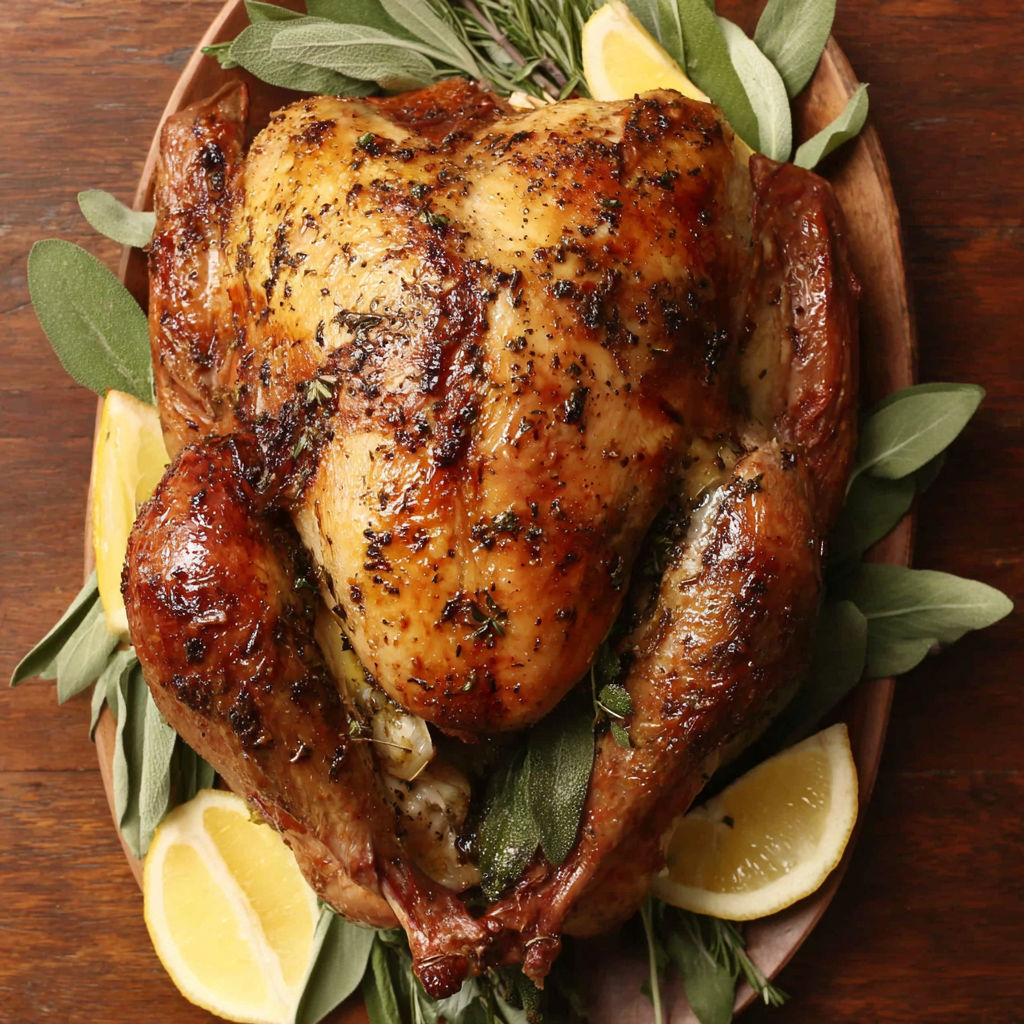
Roasting a Thanksgiving turkey that emerges moist and packed with flavor is achievable with a simple, reliable method. This recipe walks you through each step, ensuring your turkey will be the centerpiece everyone talks about at your holiday table.
My family has made this turkey recipe for years, especially during holiday gatherings, and every time the bird is carved, there is nothing left on the platter.
Ingredients
- Turkey: fresh or frozen, sized about one and a half pounds per person for the right serving amount
- Kosher salt: to brine, which promotes juiciness and enhances flavor make sure it is coarse and not iodized
- Unsalted butter: cubed and softened so it is easy to mix with herbs and slip under the skin
- Fresh sage leaves: because they add a fresh aromatic quality that complements poultry well
- Garlic: chopped to provide a pungent depth that balances the herbs
- Dried thyme and rosemary: for that classic savory herb blend, choose high quality and fragrant dried herbs
- Lemon wedges: with the skin on to brighten the overall flavor and add subtle acidity inside the cavity
- White onion: skin-on cut into wedges to release natural sugars and moisture during roasting
- Carrot and celery: chopped for a flavor base in the roasting pan that supports the roasting juices
- Low sodium chicken broth: to keep the turkey moist and create a rich pan drippings base for the gravy
- All purpose flour: optional for thickening the gravy, use fresh to avoid bitter flavors
Instructions
- Savor the Brine:
- Place the thawed turkey on a wire rack set over a baking sheet and sprinkle kosher salt all over, including inside the cavity and under any loose skin. Refrigerate uncovered for one full day. This dry brine improves flavor penetration and crisps the skin for roasting.
- Prepare Herb Butter:
- Combine softened unsalted butter with finely chopped fresh sage, garlic, dried thyme, and rosemary. Mash and mix until well blended. This fragrant herb butter will be used to flavor the bird from inside and out.
- Set the Stage:
- Preheat the oven to 325 degrees Fahrenheit and arrange one rack at the bottom and another in the middle. Use a roasting pan with a rack for the turkey and line the pan with aromatics. Place wing tips and bones removed from the turkey into the pan for added depth to drippings.
- Butter the Bird:
- Gently loosen the skin over the breast with your fingers, creating a pocket without tearing. Rub the herb butter thoroughly under the skin, inside the cavity, and all over the surface of the turkey to ensure rich flavor in every bite.
- Stuff and Roast:
- Fill the cavity with lemon wedges and onion quarters. Scatter remaining onion, carrot, and celery pieces in the roasting pan and pour in the chicken broth to maintain moisture. Place the turkey upside down on the lower rack and the wire rack with turkey on the middle rack so drippings catch below.
- Monitor and Rest:
- Roast the turkey until a thermometer reads 160 degrees Fahrenheit in the thickest part. This usually takes about 2 hours for a medium-sized bird but start checking around 90 minutes. Remove from the oven and let rest covered loosely for about 30 minutes, during which the temperature will rise to a safe 165 degrees Fahrenheit.
- Make the Gravy:
- Strain the pan drippings into a pot and bring to a boil. For a thicker gravy, whisk flour with cold broth and blend slowly into the boiling liquid until desired thickness is achieved. Keep warm until serving.
- Carve with Care:
- Transfer rested turkey to a cutting board with a lip to catch juices. Remove legs first by cutting along the joints, then slice breasts crosswise against the grain. Arrange all pieces on a platter, garnish with sage and lemon, and serve alongside the warm gravy.

One of my favorite moments is slipping that herb butter under the turkey skin because it guarantees that every bite is bursting with flavor. I still remember the first Thanksgiving I made this recipe and how the rich aromas filled the kitchen, drawing everyone from other rooms to the table.
Storage Tips
Store leftover turkey in an airtight container and refrigerate for up to four days. For longer storage, wrap tightly with plastic wrap and foil before freezing. When reheating, gently warm in the oven covered with foil to prevent drying out.
Ingredient Substitutions
If fresh sage is not available, substitute with dried sage but reduce the quantity as dried herbs are more concentrated. You can swap chicken broth with vegetable broth for a lighter flavor or use butter mixed with olive oil for a different richness level.
Serving Suggestions
Serve this turkey alongside classic sides like mashed potatoes, cranberry sauce, roasted root vegetables, and warm dinner rolls. The herb stuffing and rich pan gravy complement these dishes perfectly for a festive plate.

This simple method yields a reliably moist and flavorful turkey that will be the centerpiece of your holiday. Trust the brine and herb butter for best results.
Your Recipe Questions Answered
- → How long should the turkey be defrosted?
Defrost fresh turkey for 1 day, or frozen turkey for 4-5 days in the refrigerator. For quicker defrosting, submerge in cold water for 30 minutes per pound.
- → What is the purpose of brining the turkey?
Brining the turkey with kosher salt helps season the meat deeply and retains moisture during roasting for tender, juicy results.
- → How is the herb butter prepared?
Combine softened unsalted butter with chopped fresh sage, garlic, dried thyme, and rosemary, then mash together to create a flavorful herb butter.
- → Why is the turkey roasted on a wire rack above broth and vegetables?
Roasting on a wire rack allows even heat circulation while the broth and vegetables beneath infuse aromatics and catch drippings for flavorful pan sauce.
- → How is the gravy made from pan drippings?
Strain the pan drippings, bring to a boil, then thicken with a flour slurry if desired, cooking until reaching the perfect consistency for serving.
- → What is the recommended internal temperature for cooked turkey?
Roast until the internal temperature reaches around 165˚F (74˚C) after resting, ensuring the turkey is fully cooked and safe to eat.